Mattress materials & construction
Vispring’s Handmade Craft: Assessing Materials, Support, and Longevity
A handmade mattress can suggest care, tradition, and an almost couture attention to detail. Yet the word “handmade” is only a beginning, not a verdict. To understand how a Vispring mattress may feel and perform, look beyond the romance of its construction: examine the spring system, upholstery layers, firmness options, care requirements, and the way those details align with your own sleep preferences.
Published October 18, 2026
Craftsmanship is a method, not a guarantee
Handmade mattress construction can involve skilled, detailed processes: arranging spring units, securing upholstery, stitching borders, or tufting layers together. These methods may contribute to a particular feel and can help keep materials in place. They also make a mattress’s construction more complex than a simple list of materials suggests. But craftsmanship on its own does not tell you whether a bed will feel comfortable, suit your body, or remain supportive for years.
Those outcomes depend on several connected factors. The spring unit affects how the mattress responds to weight and movement. Upholstery influences the first impression at the surface, including softness, cushioning, and temperature. Firmness describes a broad feel rather than a universal measure of support. And longevity depends not just on how a mattress is assembled, but on its materials, use, care, and the accuracy of its specifications.
That is why a useful evaluation begins with questions rather than adjectives. What is inside the mattress? How are its layers arranged? What firmness choices are available? What does the maker mean by a particular spring count or “natural” filling? And what evidence is offered for claims about durability? The answers can make a beautifully made bed easier to assess with clear eyes.
What “handmade” might mean in practice
The phrase can describe different steps in production, so it is worth asking which parts of a mattress are made or finished by hand. A brand may refer to the way pocket springs are nested, the stitching along the mattress border, or the securing of upholstery layers. These are not interchangeable features. Each speaks to a different part of construction, and none, by itself, establishes how a bed will feel to a particular sleeper.
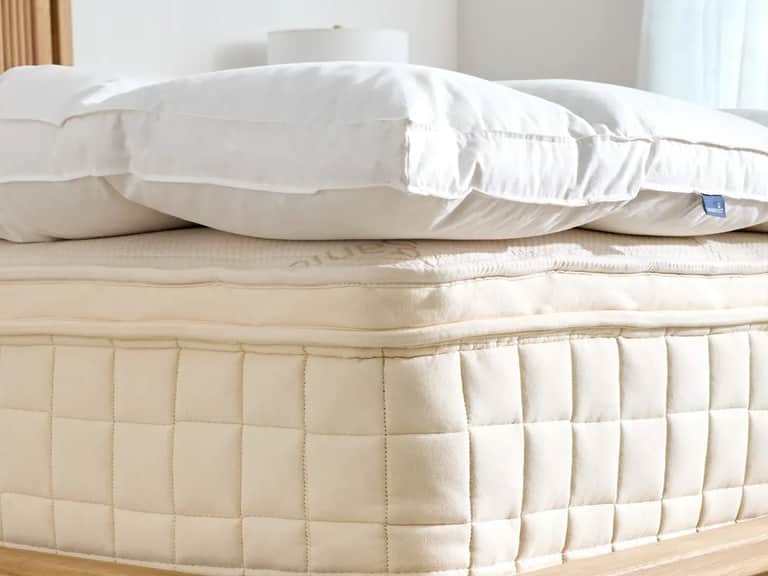
Hand side-stitching, for example, is used to connect a mattress’s border with its internal structure. Hand-tufting can draw the layers together at intervals, helping hold upholstery in position. Pocket springs, meanwhile, are individual coils enclosed in fabric pockets, allowing them to respond more independently than a single connected spring unit. In a mattress that combines these techniques, they work together as a system: one element cannot stand in for the performance of all the others.
Handmade details may be meaningful to people who value traditional production or a specific kind of finish. Still, they should be considered alongside measurable, practical information. Look for a clear explanation of the construction, rather than relying on a label that sounds reassuring but leaves the specifics unstated. Precision in description is part of the product story, too.
Reading the spring system
A mattress’s support core is one of the first places to direct your attention. Vispring describes its mattresses as using pocket-spring construction, with some models featuring multiple spring layers. In a pocket-spring design, each coil is housed separately, allowing it to compress in response to pressure in its immediate area. This can create a more individually responsive surface than a linked spring system, although the overall sensation depends on the spring tension, upholstery, and the person lying on it.
When comparing spring systems, consider the number of layers, the range of tension options, and the size to which any published spring count applies. Counts can be useful descriptive information, but they are not a standalone score for comfort or quality. A higher number does not automatically mean a mattress is better for your body. Coil design, distribution, construction, and the layers above the springs all influence the experience.
It is also sensible to check that a specification is internally consistent. Product details may differ between a model overview, technical sheet, retailer listing, or size-specific description. If a count or construction detail is unclear, ask which version applies to the exact model and size you are considering. A careful comparison depends on comparing like with like.
For couples, the question is not simply whether a mattress has pocket springs, but how it behaves when two people share it. Independent response may reduce the sense of movement traveling across the surface, but the degree of motion isolation depends on the entire build. If possible, test the mattress with a partner and notice both movement transfer and whether each side feels sufficiently stable.
Materials, layer by layer
Vispring’s natural-fibre and spring combinations invite a closer look at how different materials are intended to contribute. Wool and cotton may be used in upholstery layers; horsehair can add resilience and a springy feel; and fibres such as cashmere, alpaca, silk, or bamboo may appear in selected models. These names are evocative, but the useful question is what role each material plays in the complete construction—and how much of it is present.
Materials can affect comfort in different ways. Some create a softer, more yielding surface; others are included for loft, resilience, or moisture management. Fibres may also be blended, layered, or combined with other materials. A label such as “natural fillings” does not tell you the proportions, processing, or position of each component. When those details matter to you, seek a full layer description and ask whether the information is specific to the precise model and size.
It helps to distinguish between a material’s general properties and a claim about a finished mattress. A fibre might be known for breathability, but the sleeping temperature you experience will also depend on the mattress cover, the thickness and density of its layers, your bedding, and your room. Likewise, a resilient material does not promise that every mattress containing it will retain its shape indefinitely. The whole design matters.
Transparency is especially valuable if you have sensitivities, sustainability priorities, or specific care needs. Ask about the origin and treatment of materials where relevant, and look for clear descriptions of any certifications. A certification applies to a defined scope and standard; it should not be treated as a blanket guarantee about every aspect of a mattress.
A closer look at the surface feel
The first impression of a mattress often comes from its upholstery rather than its support core. Plush layers can feel welcoming at first contact, while firmer or more resilient layers may create a more level, buoyant sensation. With a traditional, generously upholstered mattress, the surface may have a distinct feel that changes as the layers settle beneath the body. That initial softness is not the same thing as long-term support.
As one example of the construction language used for the range, the Vispring Opulence Mattress is described as combining a triple-layer hand-nested pocket-spring system with natural upholstery materials. Its listed fillings include wool and cotton, hand-opened long-strand horsehair, and blends featuring cashmere, alpaca, silk, and bamboo. The model description also refers to hand side-stitching and woollen tufts. These details help explain the intended construction, but they do not establish whether its surface feel or firmness will suit a particular sleeper.
Descriptions such as “soft,” “medium,” or “firm” are best treated as a starting point. Firmness is experienced through the body and can vary with sleeping position, body shape, weight distribution, and personal preference. Two mattresses with the same label may feel noticeably different, while two people sharing the same bed may describe it differently. If a retailer or manufacturer provides a firmness scale, ask how it is defined and whether it refers to the surface, overall feel, or a standardized test.
Support begins with your sleep position
Support is not synonymous with maximum firmness. A supportive mattress helps you settle into a comfortable position without feeling that your body is forced into an uncomfortable angle or sinking excessively. The way a mattress distributes pressure and supports the body varies from person to person; a model that feels reassuringly firm to one sleeper may feel too rigid to another.
Side sleepers often pay particular attention to the shoulders and hips. If the surface is too unyielding for their build and preferences, those areas may feel compressed. Back sleepers may focus on whether the mattress feels steady through the torso and hips. Stomach sleepers may be especially alert to excessive sinking through the middle of the body. These are useful observations, not rules that dictate one correct firmness for every person in a category.
If you sleep in more than one position, consider how the mattress responds as you turn and settle. A highly cushioned surface can feel enveloping, while a more responsive one may make it easier to change position. Neither sensation is inherently superior. What matters is whether the bed feels comfortable and stable for your regular sleep habits.
Testing requires more than a quick sit on the edge or a few seconds lying on your back. If an in-person trial is possible, spend time in your usual positions and notice pressure, ease of movement, and whether the mattress feels balanced. If you cannot test it in person, understand the trial, return, and exchange terms before purchasing. A detailed description can inform a decision, but it cannot reproduce your own experience.
Durability: what can—and cannot—be inferred
A mattress’s longevity is difficult to predict from craftsmanship alone. Durable construction may help a mattress keep its layers in place, but the useful life of the bed also depends on the resilience of its materials, its design, how it is supported, and how it is used. Body weight, sleeping habits, room conditions, and care can all affect wear over time. Even a carefully constructed mattress will eventually change.
Look for more than a broad promise of longevity. Ask what the warranty covers, how long it lasts, and what conditions may limit a claim. A warranty is a statement about specified defects under defined terms; it is not a guarantee that the mattress will feel unchanged throughout that period. Similarly, a long warranty should not be mistaken for a measured lifespan.
Construction features such as tufting and side-stitching may help restrain the movement of upholstery layers. That can be a useful detail to understand, but it does not establish that sagging or softening will never occur. Ask how the mattress should be supported and whether the manufacturer recommends rotation or other routine maintenance. Follow model-specific instructions rather than assuming that all handmade mattresses are cared for in the same way.
Be alert to vague durability language. A more meaningful discussion connects a claim to a specific component, construction method, warranty term, or maintenance recommendation. When details are unavailable, acknowledge the uncertainty rather than translating a luxurious finish into a promise of exceptional lifespan.
Questions to ask before choosing
A considered purchase is usually less about finding the most impressive description and more about resolving the questions that matter to your household. Before selecting a Vispring mattress—or any complex, hand-built design—use a conversation with the retailer to clarify both construction and practical terms.
- Which spring configuration, tension, and upholstery layers are included in this exact model?
- Are the listed materials blended, and can you learn the approximate composition or order of the layers?
- How is the firmness description defined, and are other tensions available?
- What kind of base or bed frame is recommended, and are there restrictions on support or spacing?
- Does the mattress require rotation, and what routine care does the manufacturer recommend?
- What does the warranty cover, and what exclusions or maintenance conditions apply?
- Are the trial, delivery, and return terms clearly stated before purchase?
These questions are not an attempt to strip a bed of its appeal. They make its appeal more legible. A luxury mattress can be admired for the care of its construction while still being evaluated as an object that has to fit a real bedroom, a real budget, and real sleeping preferences.
Care and the bedroom around it
Even well-made materials benefit from sensible care. Use a supportive base that meets the manufacturer’s requirements, protect the mattress from moisture and stains where appropriate, and follow the stated instructions for rotation or maintenance. Avoid assuming that a mattress can be flipped: some designs are made to be used on one side only. Confirm the correct routine for the model you own.
A mattress protector can help limit ordinary wear and keep the sleeping surface cleaner. The right choice depends on the mattress and your priorities: some protectors emphasize a waterproof barrier, while others focus on a light, flexible layer. Check fit, washing instructions, and whether the material changes the feel of the bed. A protector should not be so tight or restrictive that it interferes with the mattress’s surface.
Other bedding influences comfort, too. Sheets, blankets, room temperature, and pillows all contribute to how a bed feels through the night. If a mattress seems too warm or too firm, consider the complete sleep setup before attributing every sensation to the spring unit. Thoughtful layering can improve comfort, but accessories are not a substitute for choosing a mattress whose underlying support is appropriate for you.
A measured comparison with other mattress styles
Vispring’s hand-built, spring-and-fibre approach is distinct from many compressed foam mattresses and from simpler innerspring designs, but “different” does not mean universally better. A mattress in a box, for instance, is defined in part by its packaging and delivery format, not by one fixed material or support profile. Boxed options can contain foam, springs, or hybrid constructions. Traditional handmade mattresses, meanwhile, may involve detailed upholstery and more substantial construction, but those attributes still need to be weighed against feel, transparency, cost, delivery, and care.
When comparing styles, focus on comparable criteria: the support system, the materials and their arrangement, available firmness choices, motion response, temperature experience, and the policies that affect your ability to make a decision. Avoid comparing a spring count from one manufacturer with a foam density from another as though either measurement alone could rank overall quality. They describe different properties.
A useful comparison is personal as well as technical. If you prefer a buoyant, layered surface and value traditional construction, a handmade mattress may merit a closer look. If you prioritize a different feel, easier handling, or a particular budget, another construction may be more appropriate. The aim is not to arrive at a hierarchy of mattress types; it is to find the design whose documented qualities match your needs.
The considered conclusion
Vispring’s handmade construction offers plenty to examine: nested pocket springs, upholstery layers, natural fibres, tufting, and stitched borders. These are meaningful elements when they are explained clearly and considered as a complete system. They are not shortcuts to judging comfort or proof that a mattress will last a particular number of years.
For a thoughtful evaluation, begin with your preferred sleep positions and surface feel. Then read the construction details closely, check the exact material and spring specifications, and ask about support, care, warranty, and trial terms. Where descriptions are broad or inconsistent, request clarification. The best decision is not necessarily the bed with the longest list of artisanal details; it is the one whose construction, practical requirements, and feel make sense for you.
Luxury, at its most persuasive, is not merely a story of precious fibres or meticulous workmanship. It is the clarity to understand what those choices mean—and the confidence to decide whether they belong in your own bedroom.